Get to know the birds around you.
From your garden to your next walk, Nestling helps you recognise birds by their appearance and calls. Practise for a few minutes a day and learn what to look and listen for when you are outdoors.
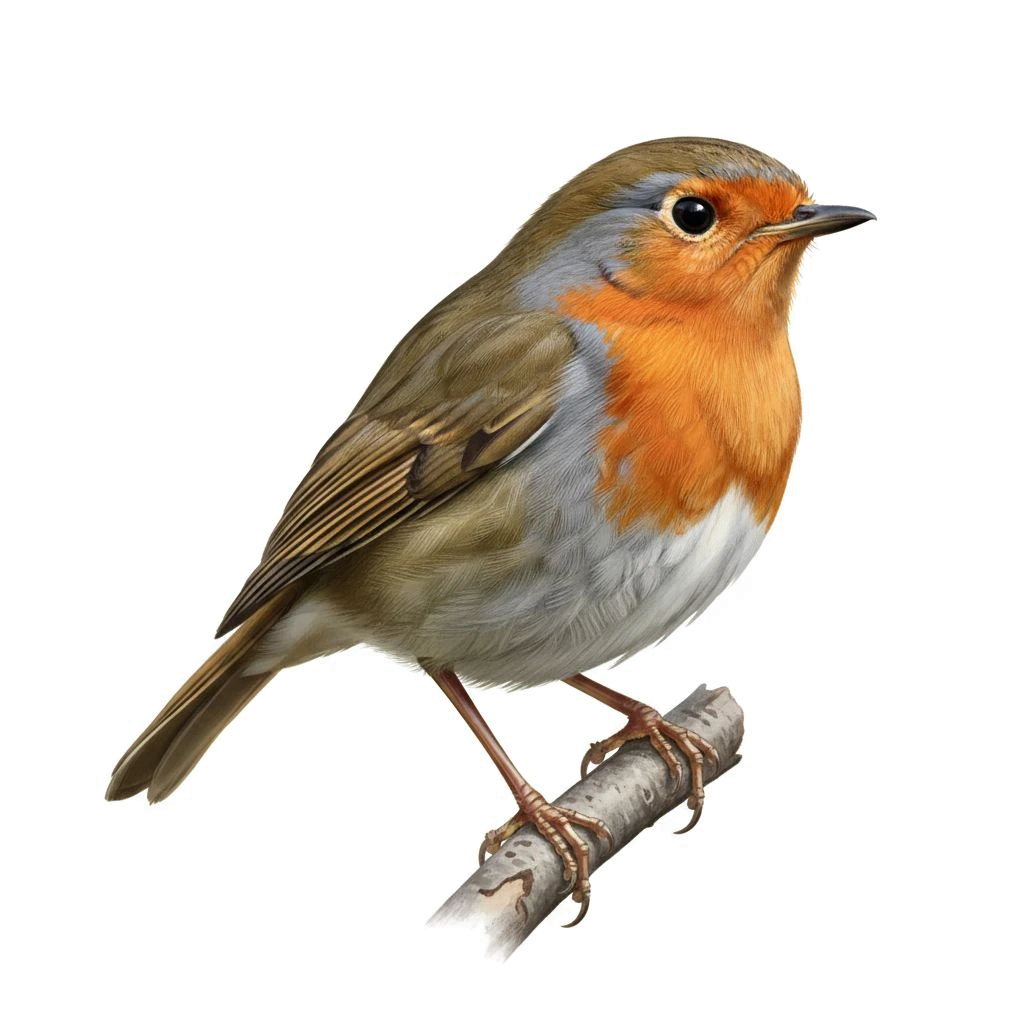
From your garden to your next walk, Nestling helps you recognise birds by their appearance and calls. Practise for a few minutes a day and learn what to look and listen for when you are outdoors.
Tours bring together birds from particular places and seasons. Start with the species close to home or explore somewhere you want to visit.
Questions return over time to help you remember what you have learned. You keep practising the plumages and calls that are still difficult to recognise.
See which species you recognise consistently in your exercises and which ones need more practice. You can build your knowledge at your own pace.
We want more people to recognise and understand the birds around them. To put a name to the bird in the hedge, recognise a familiar call and notice which species arrive with the changing seasons.
Nestling helps you build that knowledge step by step, so you can identify birds for yourself when you are outdoors. Each species you get to know gives you something new to notice, even on a familiar walk.
Illustrations, recordings and comparisons help you get to know each species from several angles. With practice, familiar details become clues you can use outdoors.
Look closely at the illustration and choose which species it shows. Each question helps you become more familiar with the bird.
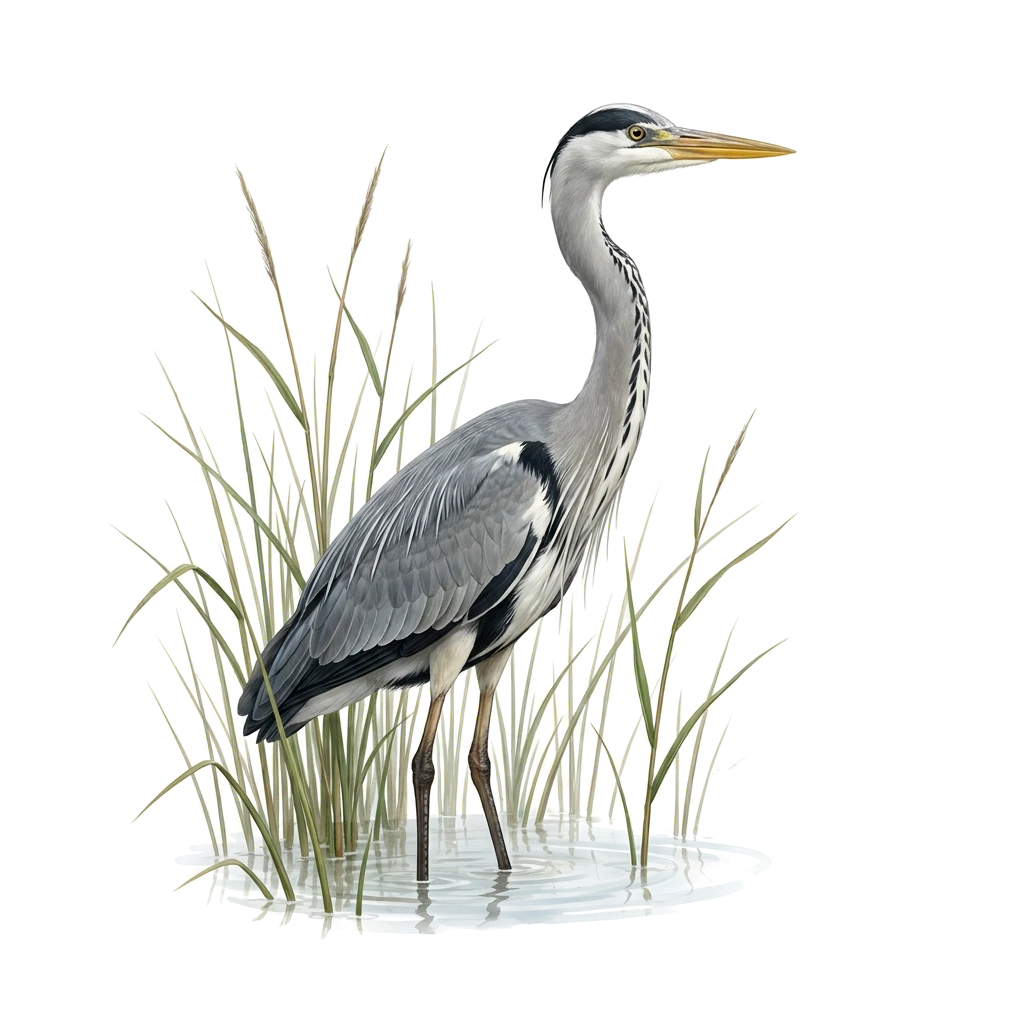
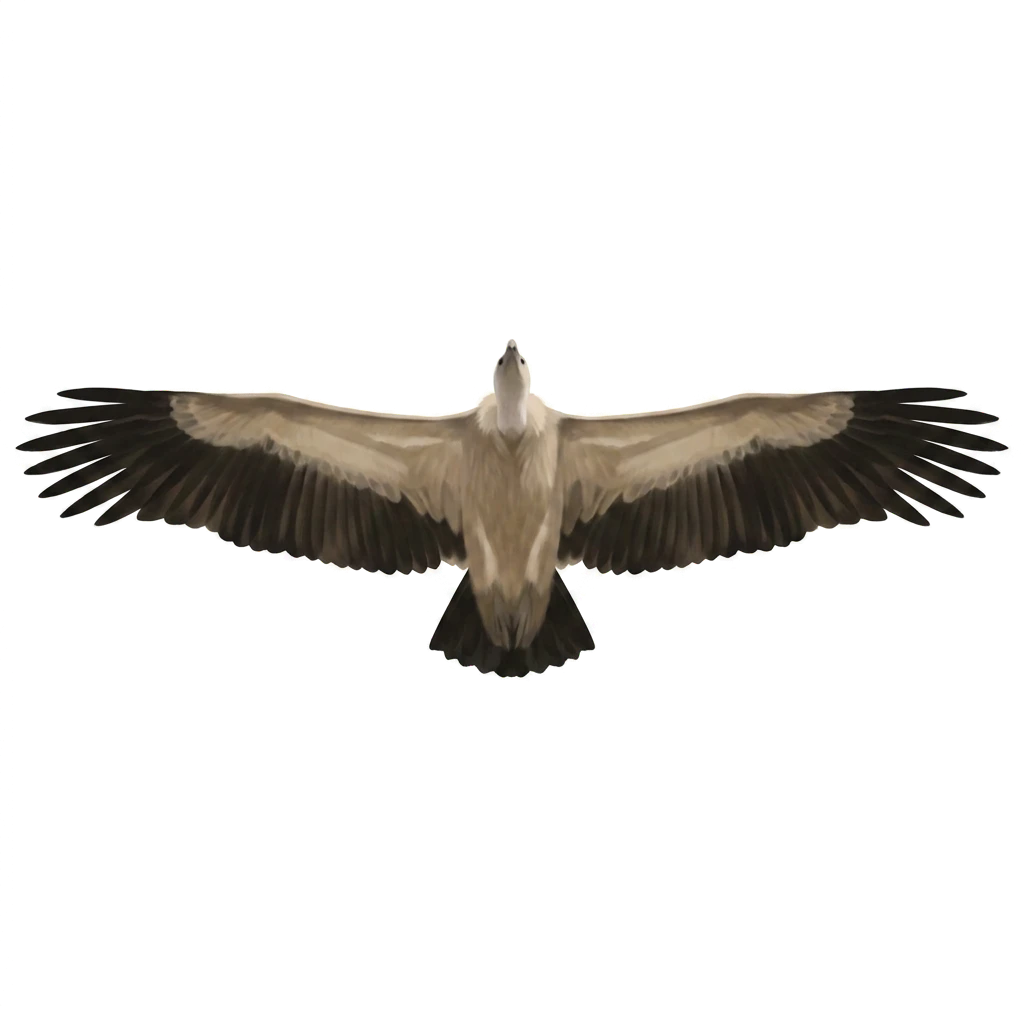
See two similar species side by side, such as an Egyptian Vulture and a Griffon Vulture in flight. Comparing them helps you spot the differences that tell them apart.
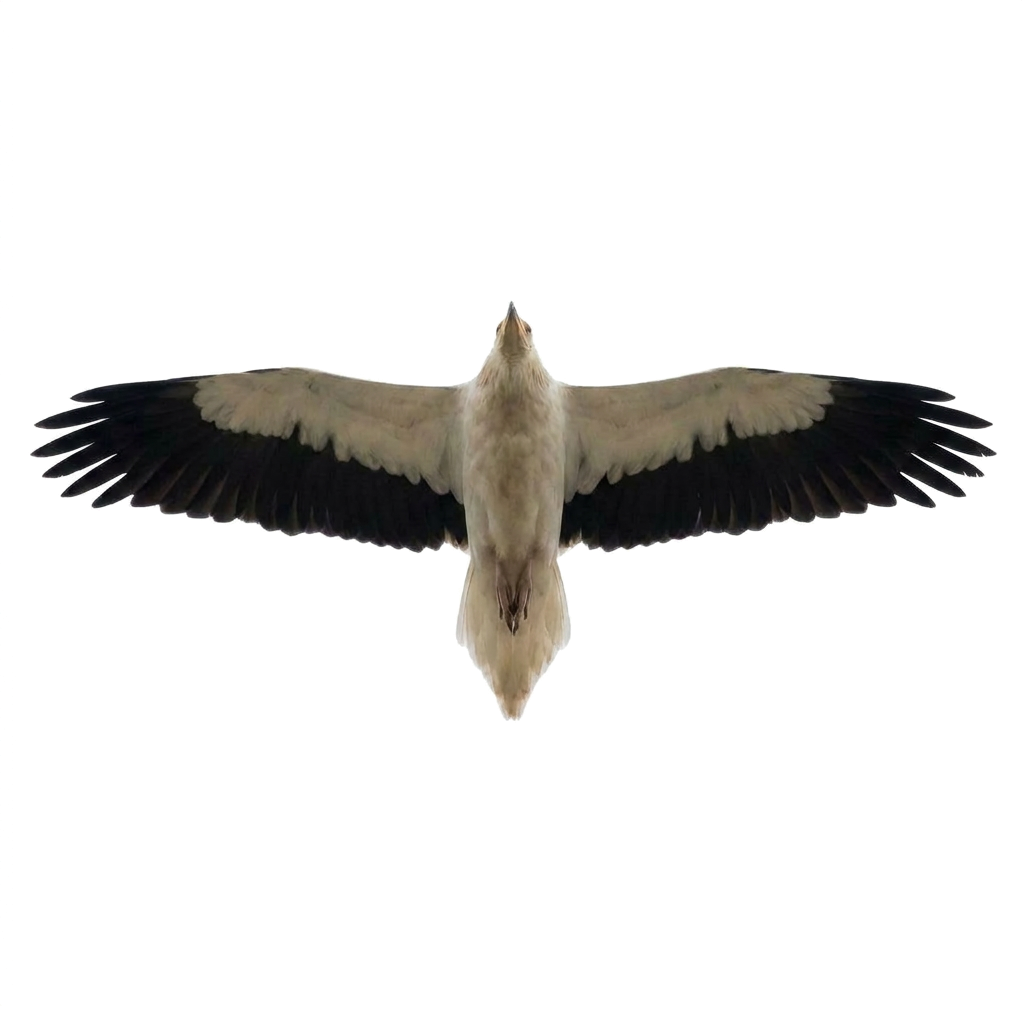
Listen to real recordings and match the call or song to a species. You will also practise finding the singer among several birds in an illustrated scene.
Guides introduce the features that help you identify a species. Each explanation points to the relevant part of the illustration, so you can see exactly what it describes.
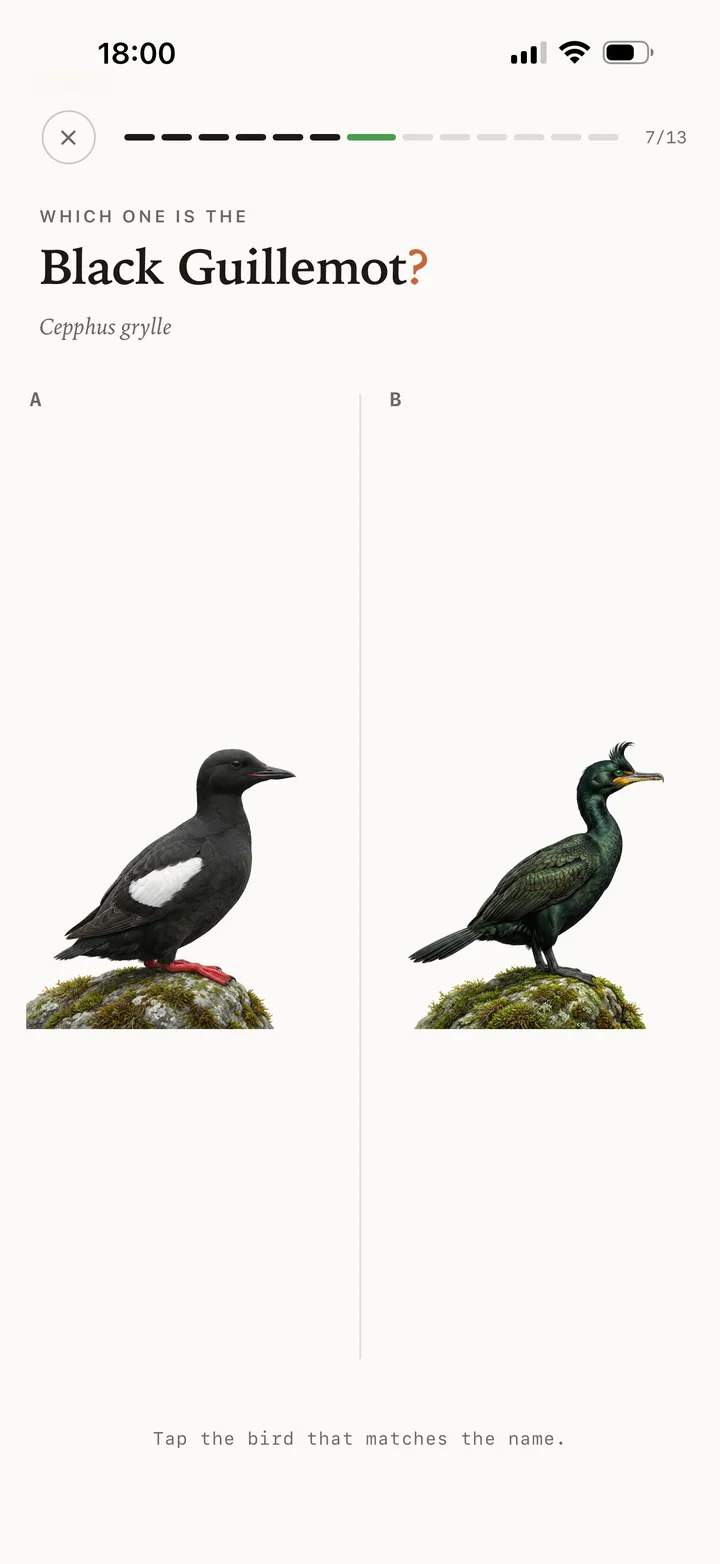
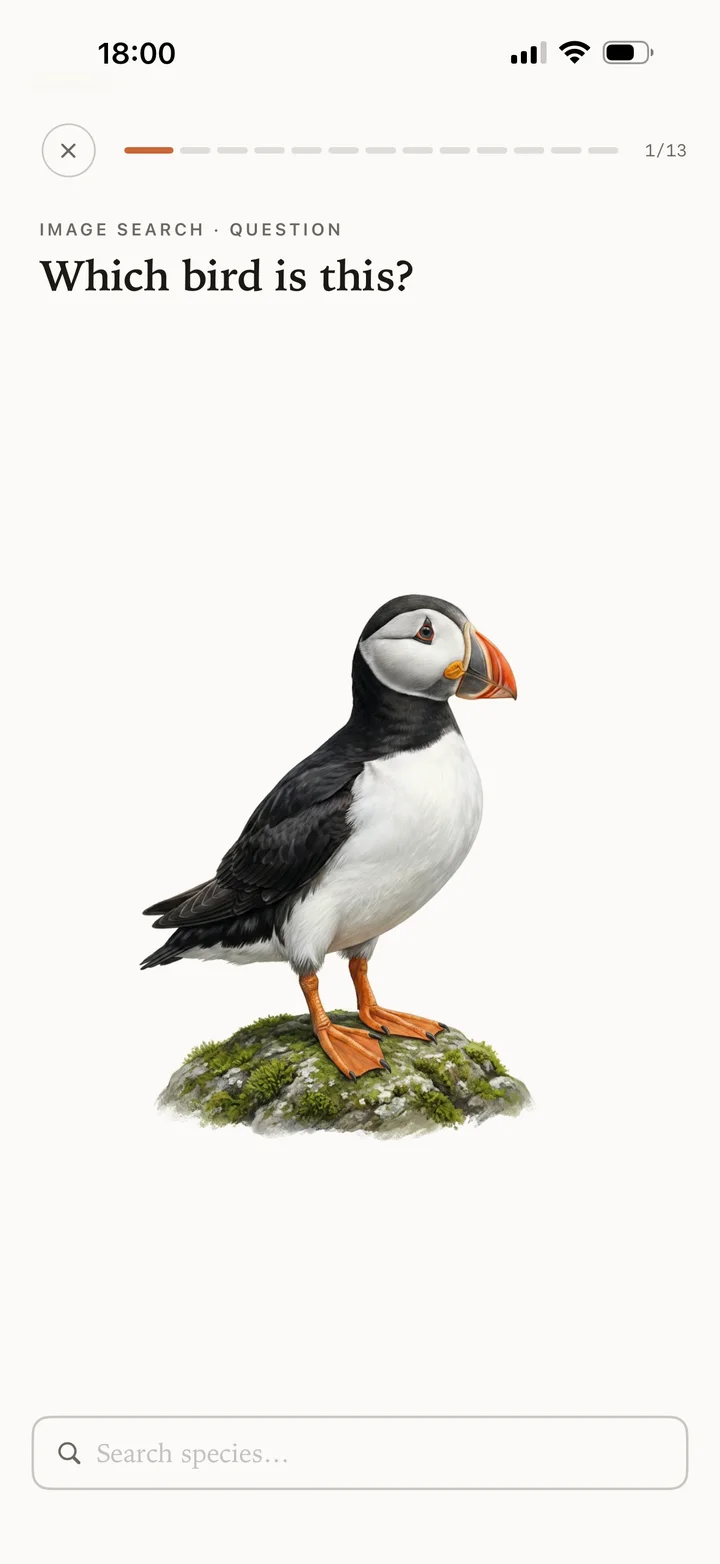
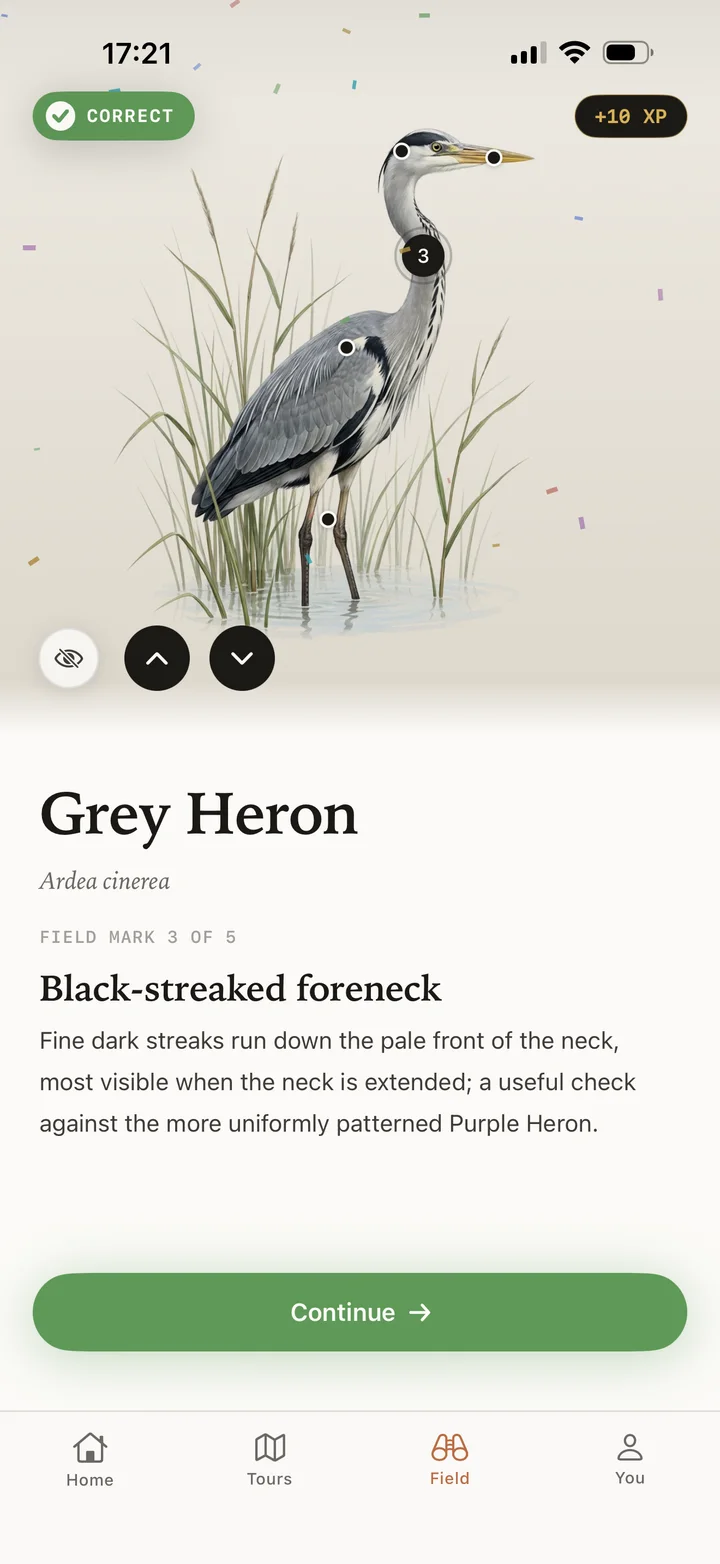
A wing bar, an eye ring or the shape of a bill can tell you which bird you are looking at. Nestling explains these features directly on the illustration and shows how they differ between similar species. Try it with the three guides below.
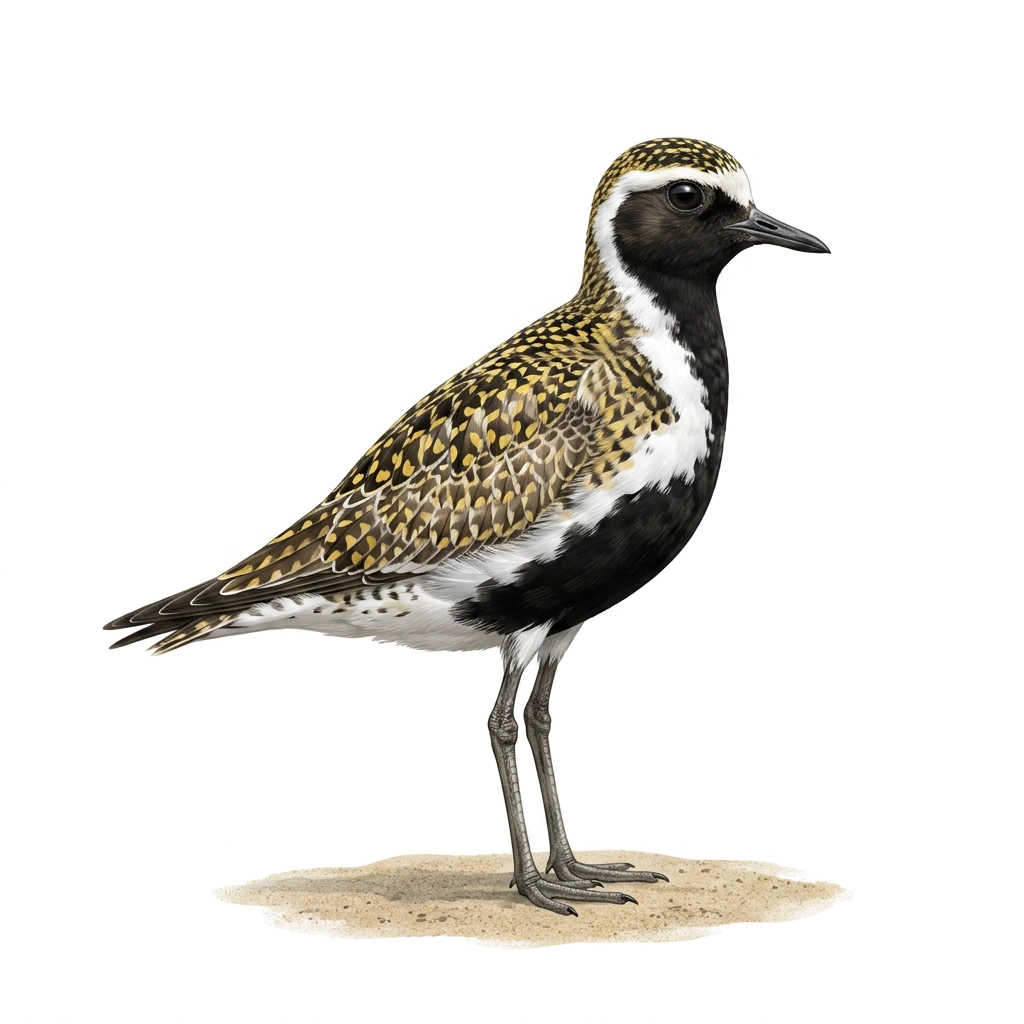
Back and wing coverts are black, densely spotted with bright yellow-gold, the feature that gives the species its name and separates it from the plainer grey-brown Grey Plover.
A white band starts above the bill and runs back over the eye, marking the top edge of the pale border that frames the black face.
Breeding males show a solid black mask from bill to throat; females and non-breeding birds show far less black.
The white border continues down the side of the neck and along the flank, cutting a clean line between the spangled back and the black underparts.
In breeding male plumage the underparts are solid black, fading to white on the lower belly and undertail; in flight the axillaries are white, unlike the grey axillaries of American and Pacific Golden Plover.
These guides are taken from the app. Select a bird, then tap or hover over a feature to see it highlighted on the illustration.
Explore birds from Norway and Germany to the Alps. Tours bring together species you can expect in a particular place and season, so you can prepare for a walk or a trip.
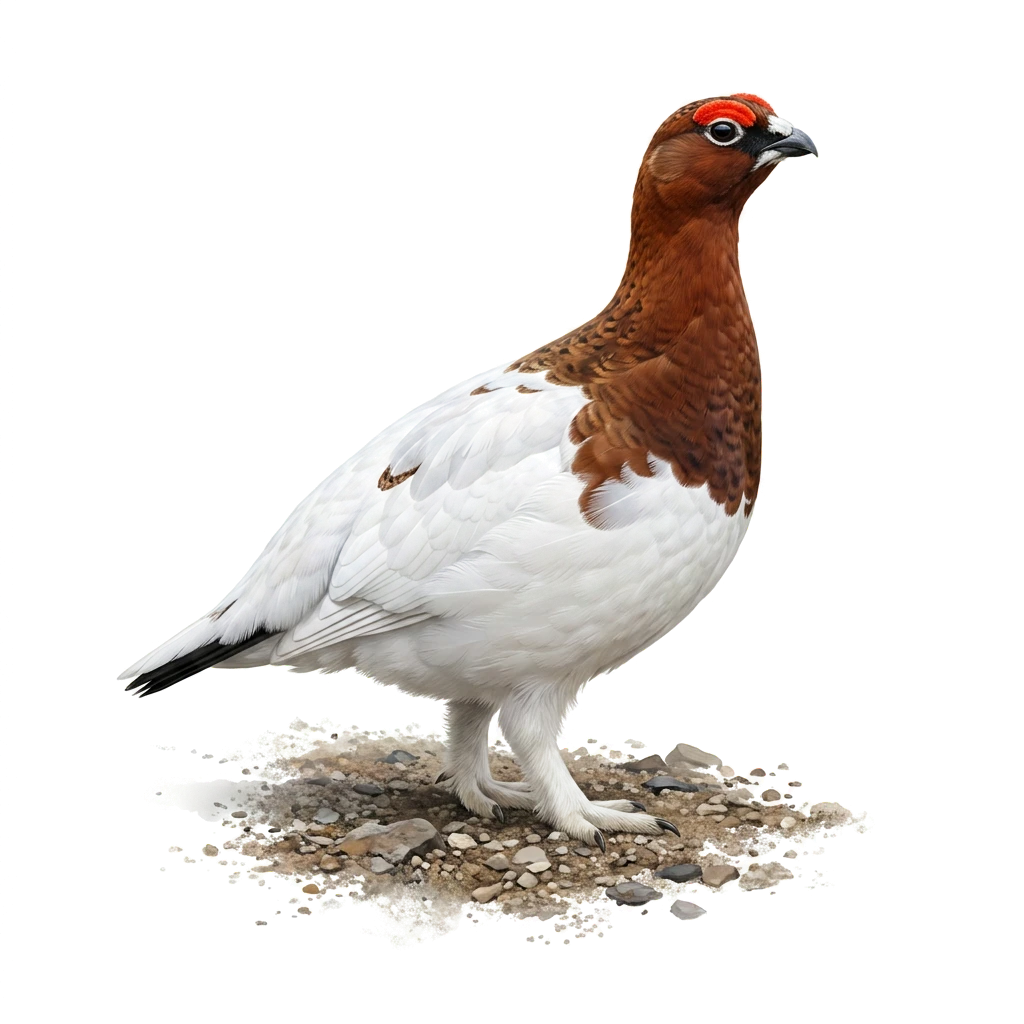
Get to know a group such as woodpeckers or waterfowl, then practise telling similar species apart. You can also explore trickier plumages, including juvenile gulls and ducks after the breeding season.
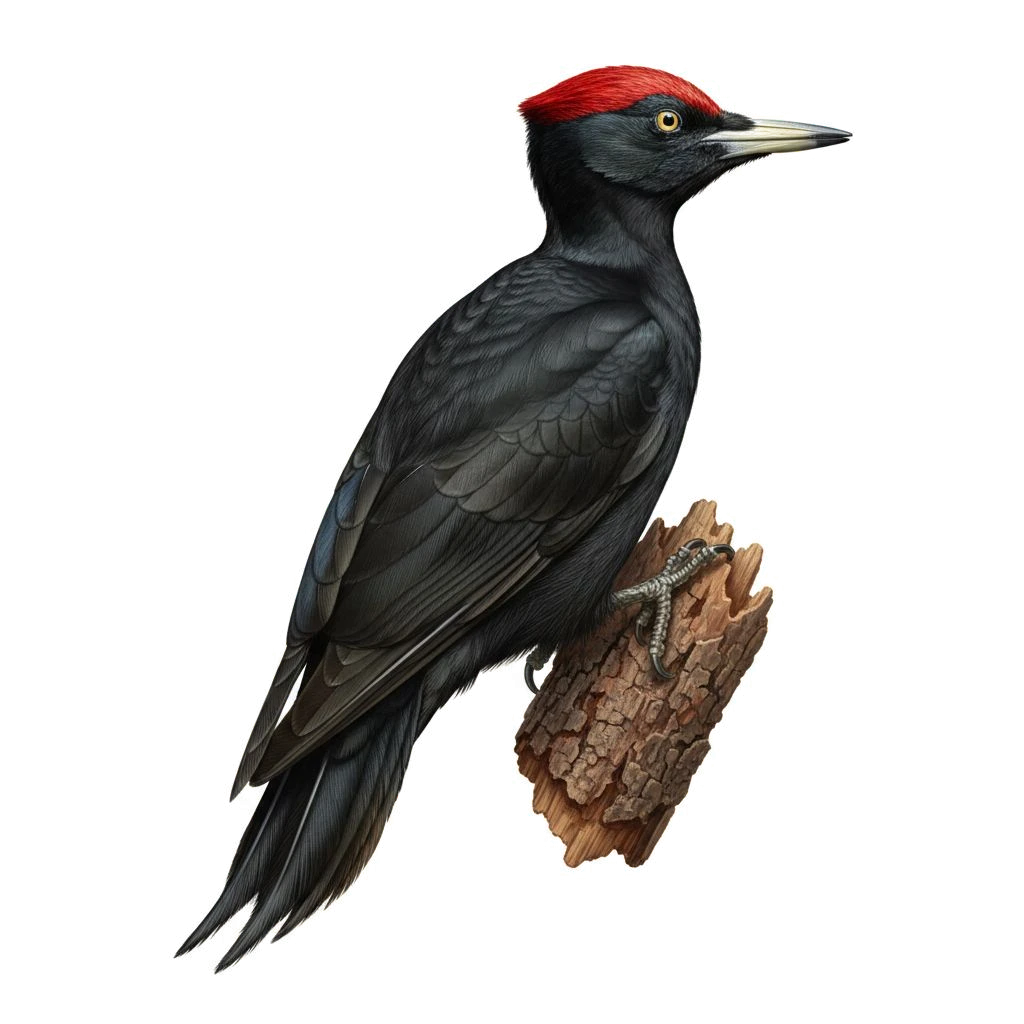
You can already practise with more than 260 species, and Nestling keeps growing. Many birds appear in several plumages and poses, including males, females and young birds, perched, swimming or in flight. This helps you become familiar with the different ways a species can look.
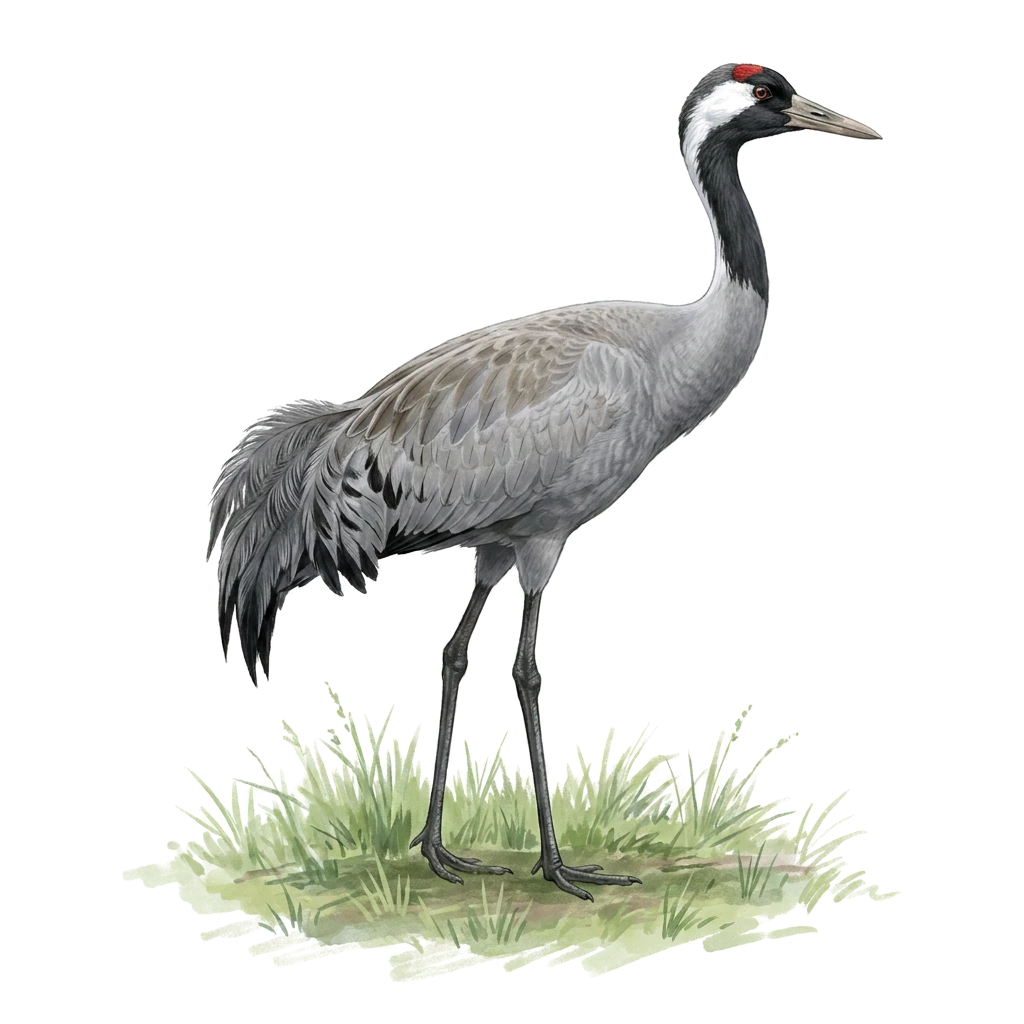
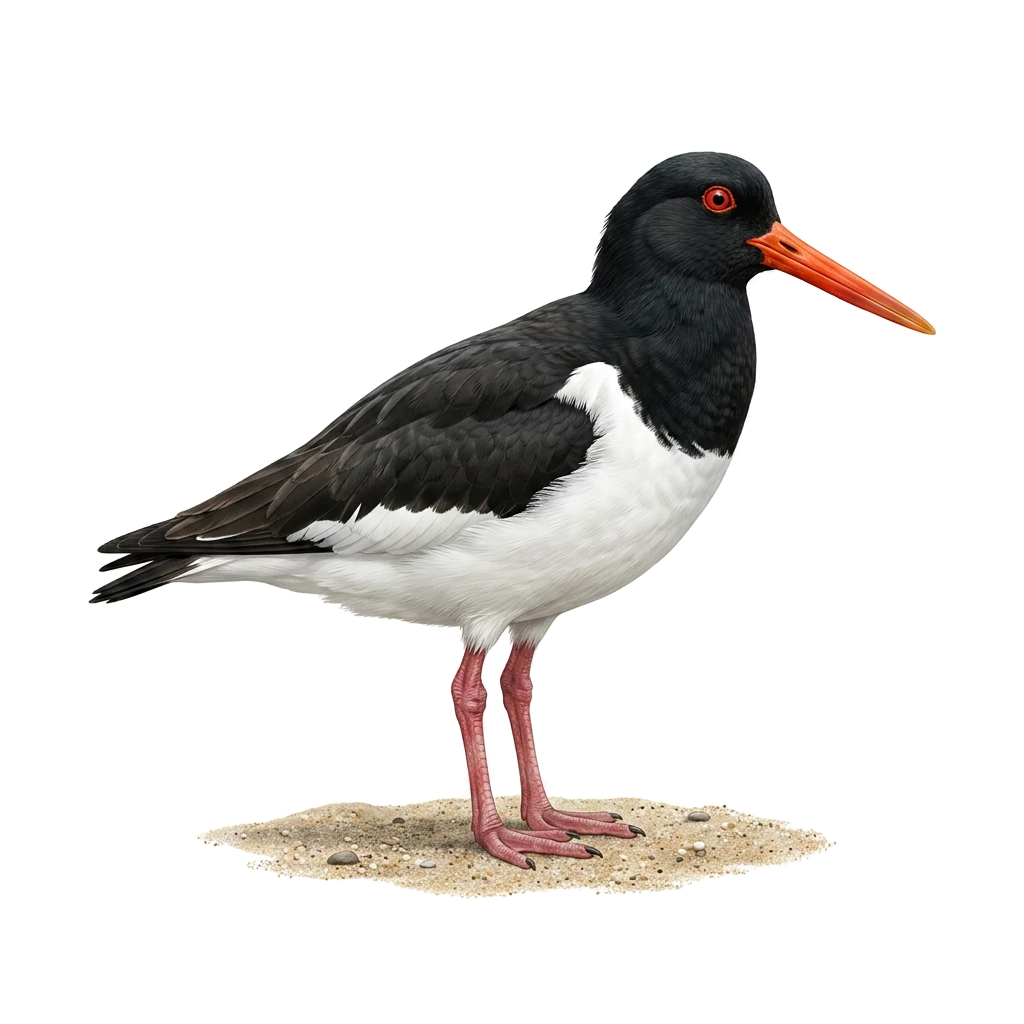
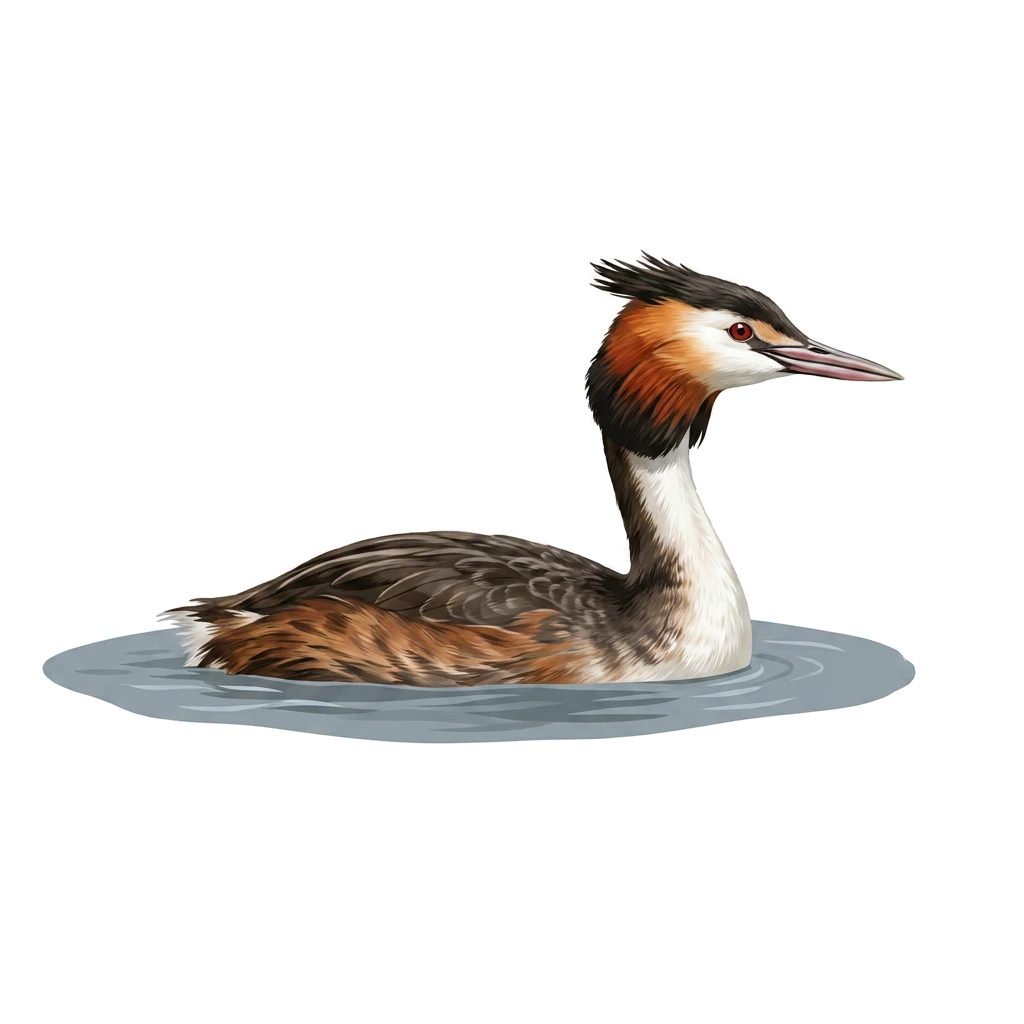
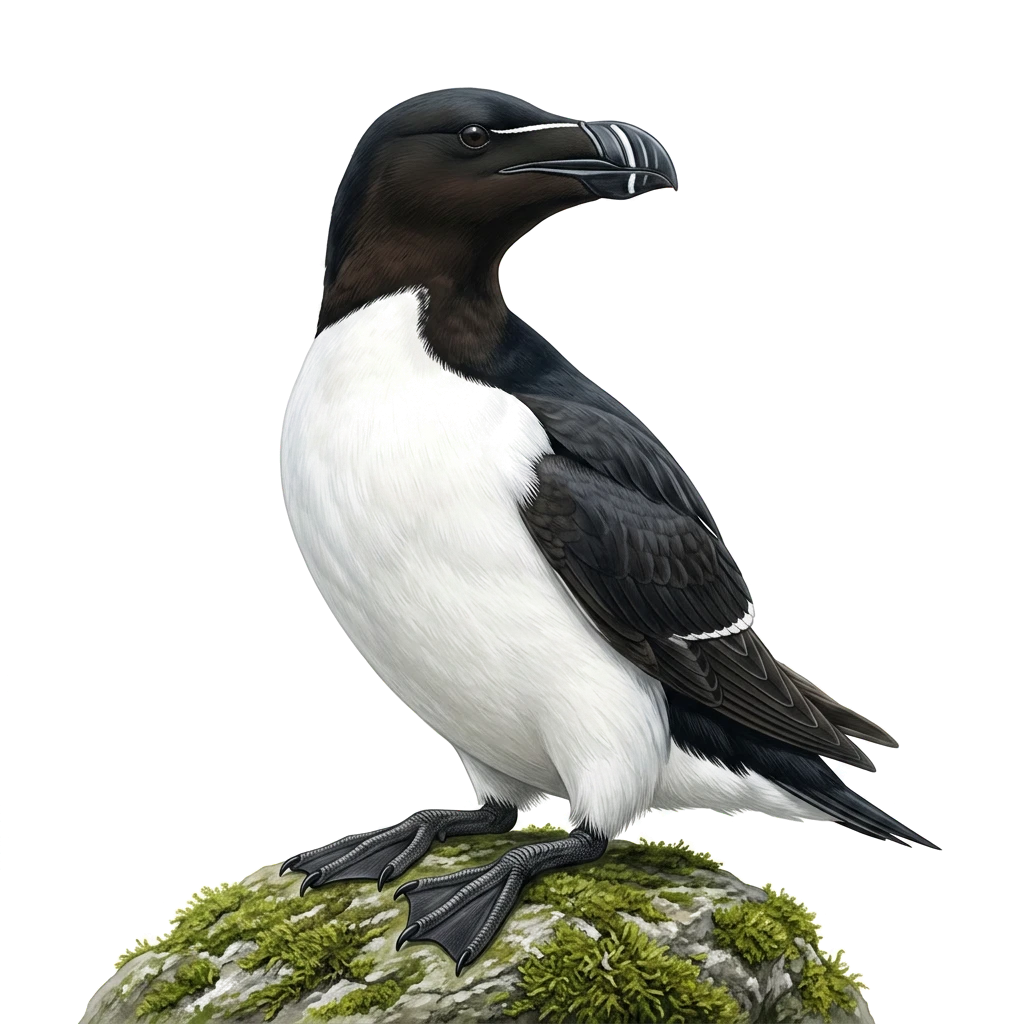
We love the illustrations in classic field guides. We want Nestling to feel like opening one of those books, with a consistent style and room to look closely at each bird. That is why illustrations are part of the learning experience we are building.
As a small, self-funded team, we could not currently commission all the illustrations this requires. We have built our own studio, where we use AI to create field guide plates from real reference photographs. Nature photography is an essential foundation of this work.
We oppose the spread of AI-generated or substantively AI-altered images passed off as genuine nature photographs. They misrepresent real observations and undermine trust in photography, science and art.
That is why we deliberately create illustrations for Nestling rather than photorealistic AI images. Our plates use a visibly illustrative style to help you learn to identify birds. They do not claim to document a real sighting.
Each illustration below was created using the photograph beside it as a reference. The photograph records a real moment; the illustration is a generated image for learning.
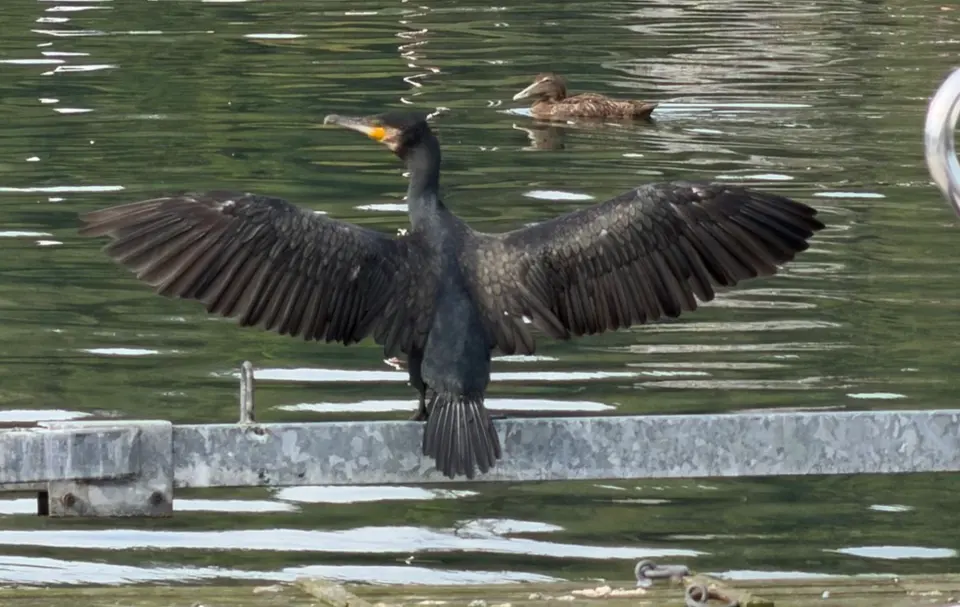
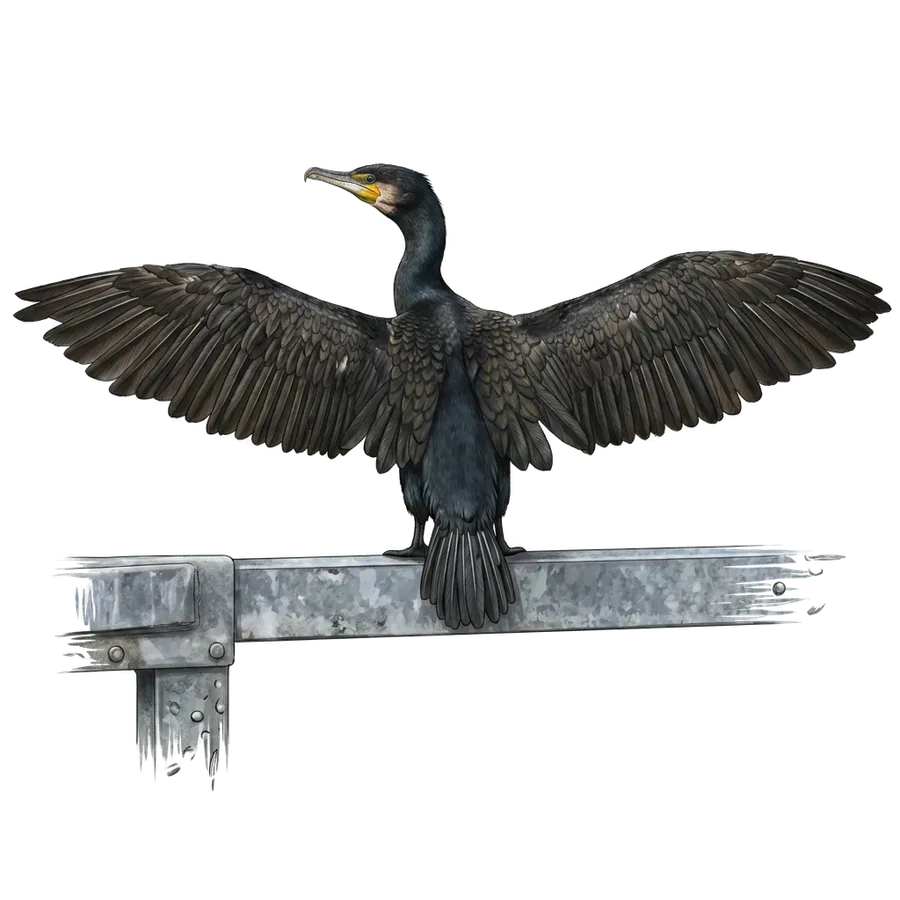
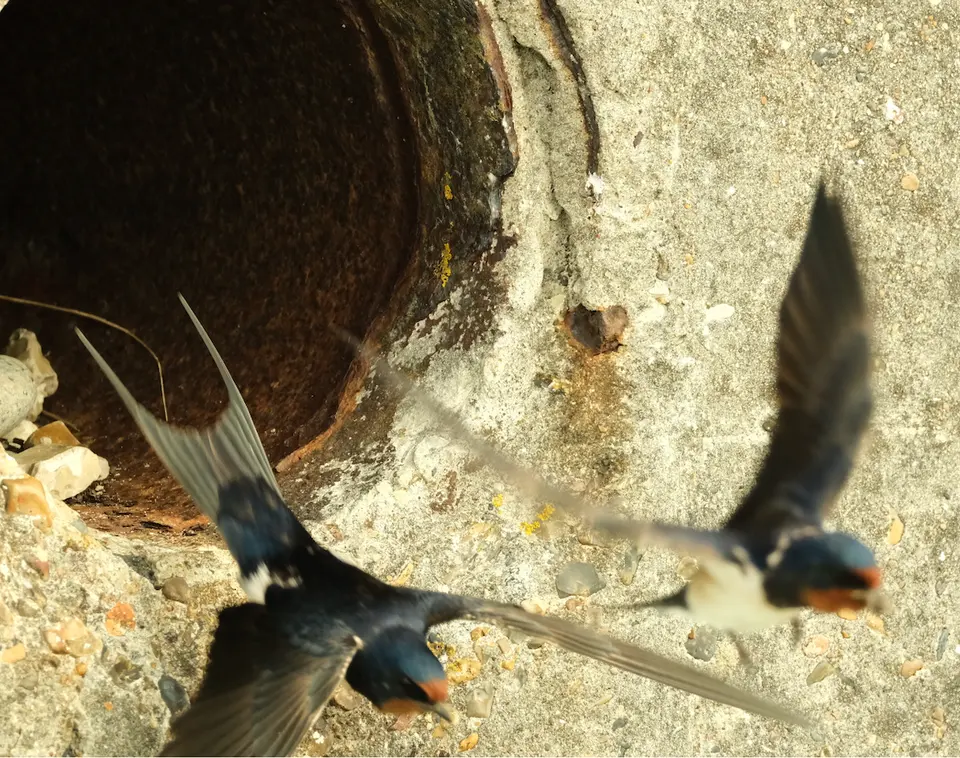
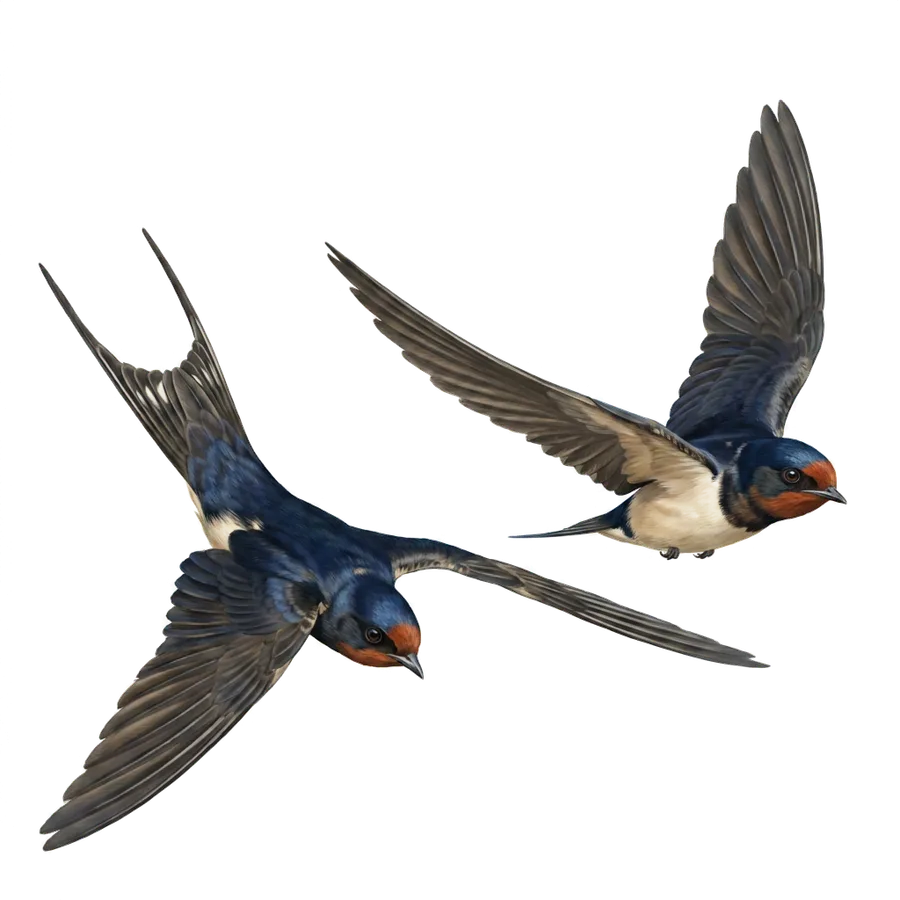
For our references, we use only our own photographs, images whose photographers have explicitly permitted this use, or public-domain images. This describes the references we choose for our illustrations, not the training data of the AI models we use.
AI can get plumage, proportions and identifying features wrong. We check each plate against references before a person approves it for publication. That does not guarantee a perfect result. If you spot an error, please tell us so we can investigate and correct it.
Would you like to contribute photographs, or have you spotted an error in an illustration? Write to us at nestling@canopylabs.dev.
Nestling+ gives you access to all tours, including those added as the app grows. Buy it here and you will receive a code to redeem yourself or give as a gift. The Friends & Family plan is available exclusively on this website and covers up to six people.
€24.99
One-time payment, total price incl. VAT. No automatic renewal.
Get Nestling+€39.99
One code for up to 6 people, about €6.67 each. One-time payment, total price incl. VAT.
Get Nestling+€69.99
One-time payment. Valid for as long as Nestling is offered. Total price incl. VAT.
Get Nestling+Share a love of birds. How gifting works