Nestling › How to start birding
Guide
How to start birding
You start birding by watching the birds you already walk past and learning one mark that separates each one from the bird it resembles. A garden, a park or a window is enough for the first month. Ten minutes on several days will do more than a single long trip with a field guide you have not opened yet.
How do I get started with birding?
Pick a place you can visit again, learn the few birds that use it, and write down one mark before you look the bird up. Add binoculars and a field guide when the birds are no longer on the feeder in front of you.
- Same place, several days
A garden, a balcony, a park on the way to work. Birds you meet twice are the ones that stick. Nestling covers European species, so the same birds serve a start in Britain, Ireland and on the continent.
- One mark per bird
Size against a Robin or a Blackbird, bill shape, one patch of colour. The RSPB walks through size, silhouette, bill, colour, behaviour, habitat and time of year in its identification tips.
- Write it down, then look it up
Three lines in a notebook. The name comes after the mark, so you remember what you saw.
- Add sound in the first week
One song a day. A Robin at dusk, a Blackbird from a roof, a Great Tit repeating a short phrase. Describing it in your own words fixes it.
How can I identify birds in my garden?
Compare the bird with one you already know, then check a single mark: cap, wing bar, rump, bill. Behaviour helps when the plumage is dull. Dunnocks shuffle under bushes, House Sparrows sit on feeders, Blackbirds hop, Starlings walk.
Start with the feeder and the lawn. The twenty birds below are widespread in UK gardens. Local lists differ: Hooded Crows replace Carrion Crows in much of Ireland and north-west Scotland, and Tree Sparrows are local. The same species occur across much of Europe, which is the set Nestling teaches.
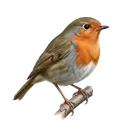
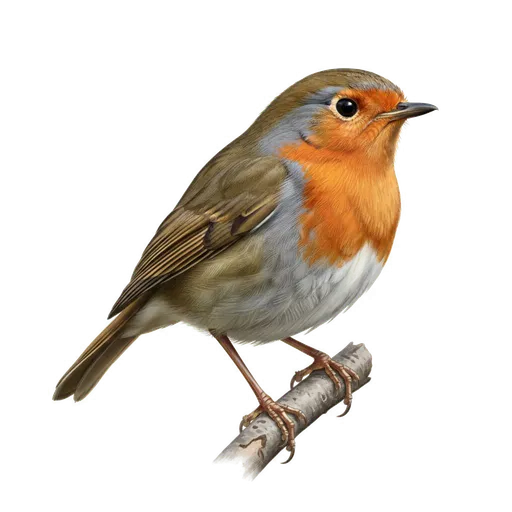
Orange face and breast, olive-brown above. Sexes alike. Often on the ground.
Male black with a yellow bill. Female dark brown. Hops and turns leaves.
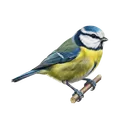
Blue cap, white face with a dark eye-stripe, yellow underparts. Smaller than a Great Tit.
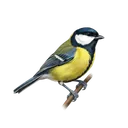
Black cap, white cheeks, yellow belly with a black stripe. The Coal Tit has no yellow belly and a white nape patch.
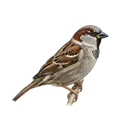
Male with a grey crown and a black bib. Female plain grey-brown. The Dunnock is streakier, with a thin bill, and stays low under shrubs.
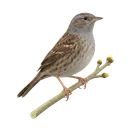
Streaked brown, slim bill, shuffles on the ground. Easy to pass over as a sparrow.
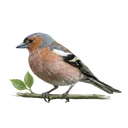
White wing bars on both sexes. Male pink below with a blue-grey crown. No white rump (that is the Brambling, a winter visitor).
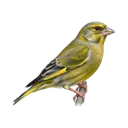
Olive, stout bill, yellow in the wing and the tail edge. Less streaked than a Siskin.
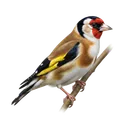
Red face, broad yellow wing bar. Often on seed heads.
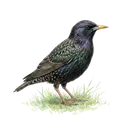
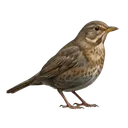
Speckled, short tail, walks. A Blackbird hops.
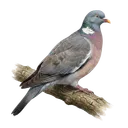
Large. Adults show a white neck patch and a white band in the wing.
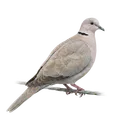
Slim, sandy, a thin black half-collar on the neck.
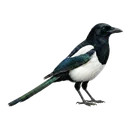
Black and white, very long tail.
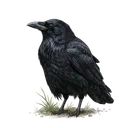
All black, heavy bill. The Rook has a bare pale base to the bill. The Hooded Crow is grey-bodied.
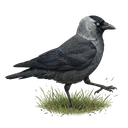
Smaller than a crow, grey nape, pale eye.
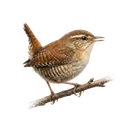
Tiny, tail often cocked. The song is very loud for the bird.
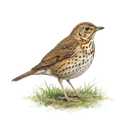
Brown above, spotted breast. Repeats each short phrase several times. Often alone.
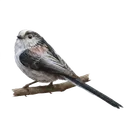
Tiny, very long tail, usually in a party moving through the bushes.
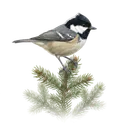
Black cap, white cheeks, white nape patch, no yellow belly. Smaller than a Great Tit.
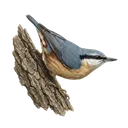
Blue-grey above, black eye-stripe, buff below. Climbs down a trunk head first.
What month is best for bird watching?
April and May are the easiest months to start in the UK: birds sing, the breeding plumage is on, and the days are long. January is the best month at a garden feeder. September and October are excellent on the coast for migration, and harder if you are still learning the garden birds.
There is no single best month for every habitat. Midwinter mornings are short and quiet away from food. June is still full of birds, with more leaves in the way. If you can pick one fortnight for a first trip beyond the garden, choose early May. If you can pick one hour at home, choose the morning after you have put food out in January.
The early morning, from sunrise for about two hours, is the richest time of day in spring. A second, shorter spell comes in the late afternoon. Wind and heavy rain quiet things down.
Learning birds by ear
Learn five songs before you try a dawn chorus. Robin: a thin, wistful warble, including in winter. Blackbird: slow and fluty, each phrase different. Great Tit: a simple phrase repeated, often two notes. Chaffinch: a short run that speeds up and ends in a flourish. Wren: a loud rattling trill, bigger than the bird.
Listen on xeno-canto, one species at a time, and say the pattern out loud. Song Thrush against Blackbird is the useful second pair: the thrush repeats each short phrase, the blackbird does not. The same method, in German and with a seven-day garden list, is on Vogelstimmen lernen.
What to take with you
- Nothing, at the window. The first feeder birds need eyes and a notebook.
- Binoculars, when you leave the garden. 8x32 or 8x42 is the usual start. Eight-times magnification is steady enough to hold.
- A field guide. Collins Bird Guide is the standard for Europe, including Britain. It shows the plumages a single plate leaves out.
- Quiet clothes and an hour. A telescope can wait until you are watching waders or distant wildfowl.
The RSPB beginner’s guide makes the same point: watching is the start, optics come after. Auf Deutsch steht der Ablauf in Vogelbestimmung lernen.