Nestling › Tell vultures apart from below

Tell vultures apart from below

Start with the wings and tail, then look at the colours. The illustrations show adult birds.

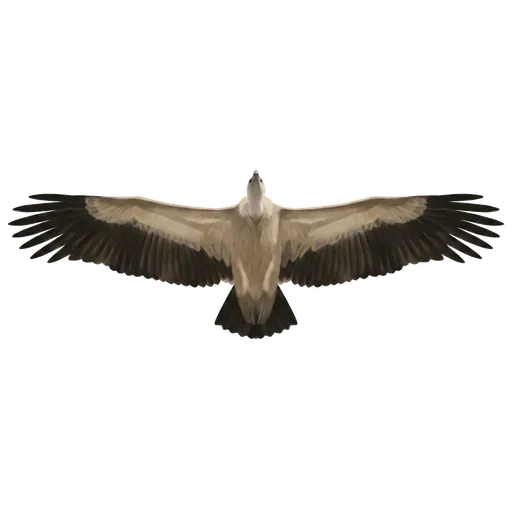
Griffon Vulture in flight from below, illustration from Nestling
Griffon Vulture2.30 to 2.80 m
Cinereous Vulture in flight from below, illustration from Nestling
Cinereous Vulture2.50 to 2.95 m
Bearded Vulture in flight from below, illustration from Nestling
Bearded Vulture2.35 to 2.85 m
Egyptian Vulture in flight from below, illustration from Nestling
Egyptian Vulture1.55 to 1.80 m

Wingspans side by side.

Griffon Vulture (Gyps fulvus) from below, illustration from NestlingPale wing coverts

Griffon Vulture

Gyps fulvus · Wingspan 2.30 to 2.80 m

Broad wings and a short tail. The paler feathers along the front of the underwing contrast with the long, dark flight feathers behind them.
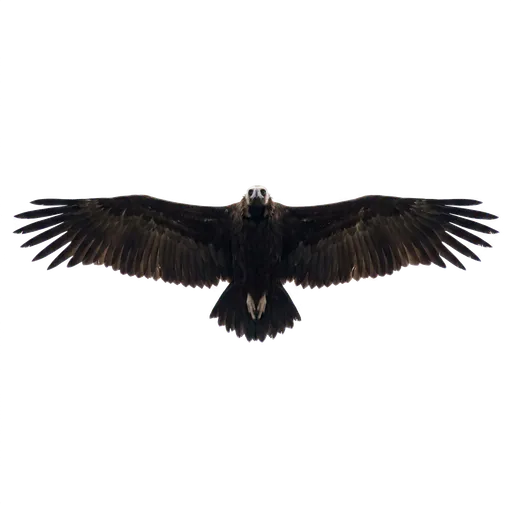
Cinereous Vulture (Aegypius monachus) from below, illustration from NestlingEvenly broad wings

Cinereous Vulture

Aegypius monachus · Wingspan 2.50 to 2.95 m

Very broad, almost rectangular wings and a short tail. From below, it looks much more evenly dark than a Griffon Vulture.
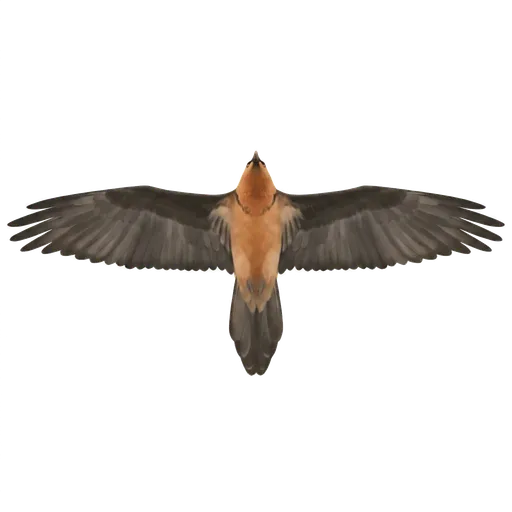
Bearded Vulture (Gypaetus barbatus) from below, illustration from NestlingLong, wedge-shaped tail

Bearded Vulture

Gypaetus barbatus · Wingspan 2.35 to 2.85 m

Look for the long, wedge-shaped tail and long, narrower wings. Adults have a pale to rusty-coloured body.
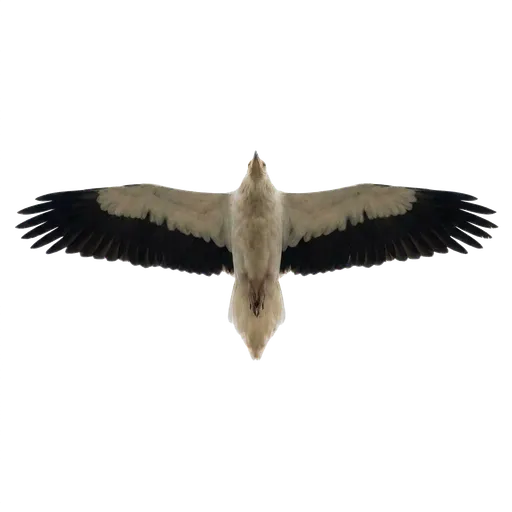
Egyptian Vulture (Neophron percnopterus) from below, illustration from NestlingBlack flight feathers

Egyptian Vulture

Neophron percnopterus · Wingspan 1.55 to 1.80 m

A pale body and pale front of the wings contrast strongly with the long, black flight feathers. The pale tail is wedge-shaped. These features describe the adult.

Keep in mind

Young birds can look very different, especially Bearded and Egyptian Vultures. Against the light, even a Griffon Vulture can look almost black. A dark silhouette alone is not enough for identification.

Keep practising with six picture questions

Practise

Nestling: learn to identify birds

Nestling is a playful way to practise recognising birds. It does not replace a field guide. It is your daily training, so you learn to identify birds yourself.

Start Nestling for free

For iPhone and Android.

Look it up

For careful identification

Use a professional field guide that also shows birds of different ages and in different plumages, for example: